Web design / Ballymena, County Antrim
Lowe Design builds websites for businesses in Ballymena, County Antrim. We are a web design agency based in Coleraine, under an hour up the road, and we work with independent retailers, manufacturers, engineering firms and trades across Mid and East Antrim. Every site is built to rank in Google, to be read and quoted by AI search tools, and to turn a visitor into an order or an enquiry.
Recent work on this coast
Two of our featured projects, both relevant to a town built on shops and trade: one sells online through a single checkout, the other was made to bring people back into a town centre.
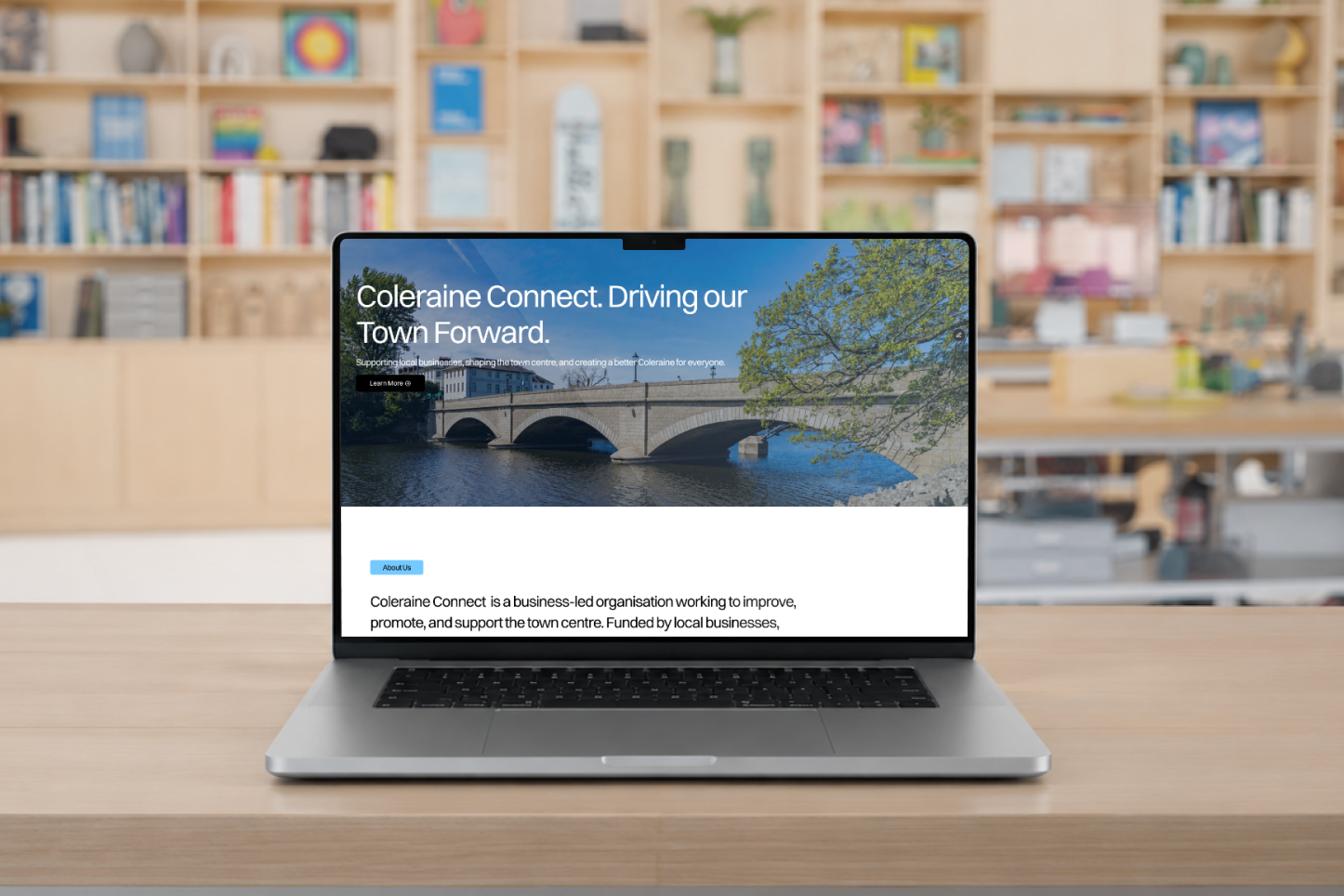
Coleraine Connect: A Town Centre Rebrand and Campaign Platform
A new brand and website for Coleraine town centre, built to give its independent shops one place to be found and promoted.
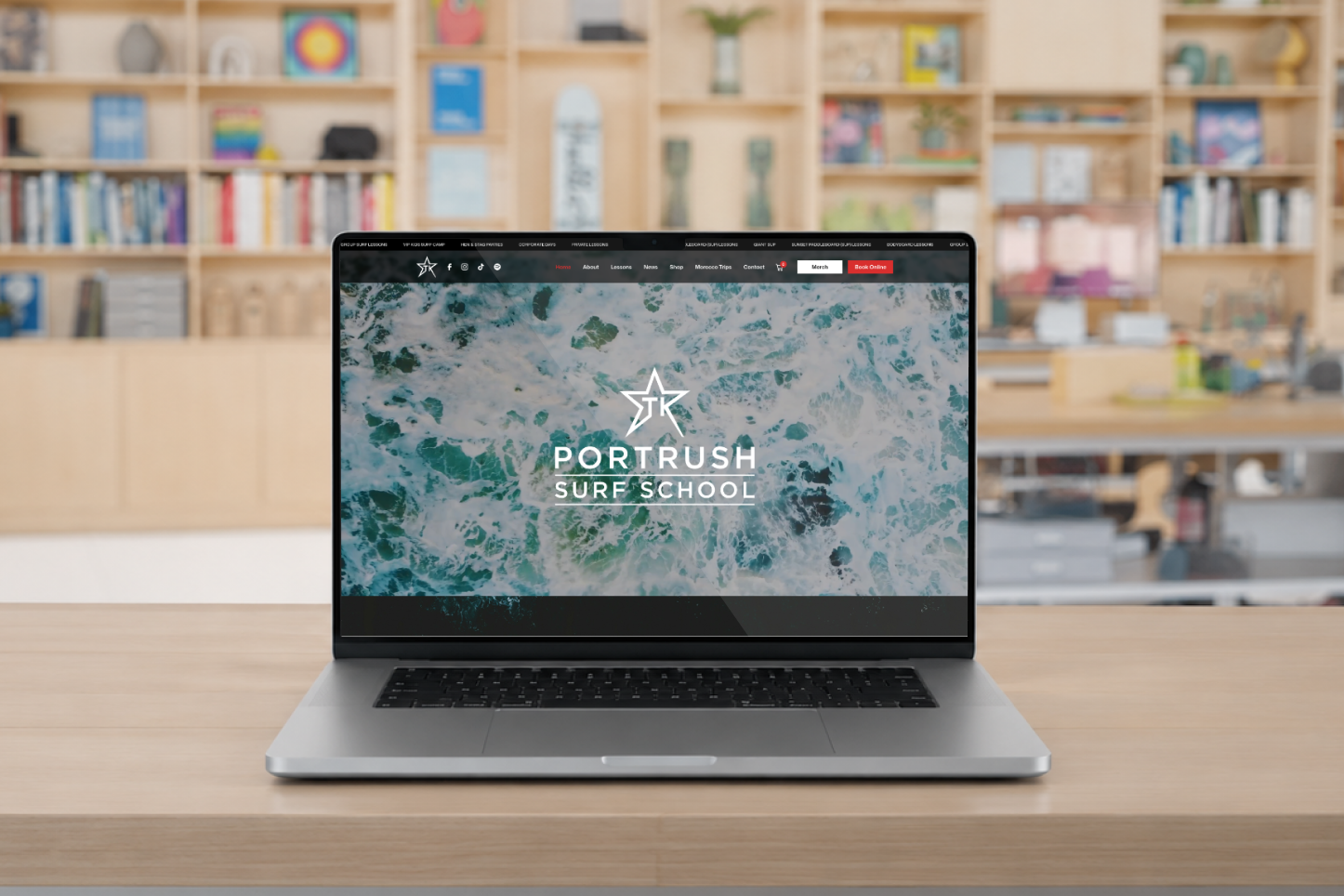
Portrush Surf School: Custom WordPress Website with Ecommerce
Lessons and gear sold through one checkout, so the site takes the order instead of the phone.
Free AEO scanner
Have a website that doesn’t perform?
Use our free AEO scanner to see exactly why, in under a minute. Or skip straight to a real conversation and get in touch directly.
enquiries@lowedesign.io01
The shop window is no longer on the street
Ballymena has always been a town people travel to. It draws shoppers from villages across mid Antrim, it has two shopping centres in Fairhill and the Tower Centre, and it has independents that have traded for generations. It is also a town that makes things, with Wrightbus building buses here and a long line of engineering and fabrication firms around it.
Both halves of that economy now meet their customers online first. Someone buying a sofa has looked at six retailers on a phone before getting in the car. A procurement manager looking for a fabricator has a shortlist before anyone lifts a phone. If you are not on the screen at that point, the footfall and the tender list are decided without you.
That shortlist is increasingly written by a machine. People ask ChatGPT, Claude or Google's AI results where to buy a wood burning stove near Ballymena, or who does stainless steel fabrication in County Antrim. The answer names a handful of businesses, and it can only name the ones whose websites say clearly what they sell, where they are and who they work for.
We build for that. Pages a search engine can crawl, plain statements an AI tool can quote, and enough real detail that a buyer has a reason to pick you.
02Common question
Can an independent shop compete with big online retailers?
An independent shop can compete with big online retailers by winning the searches where being local is an advantage, not by trying to match them on price and next day delivery. Those are different contests, and the second one is already lost.
The searches you can win have a place or a need in them. Bed shop near Ballymena. Same day collection. Fitted and delivered. Someone who can come out and measure. A national retailer cannot honestly answer any of those, and you can.
Three things make it work. Put your real stock online with prices and availability, because a page that says call for details loses to one that shows the item. Offer click and collect, which gives the customer the certainty of an online order and gets them into the shop. And keep your Google Business Profile, opening hours and stock information consistent, since that is what map results and AI answers draw on.
You do not need every product on the site on day one. Most shops start with the lines that people search for by name and build out from there.
03Common question
How does a manufacturer get enquiries from its website?
A manufacturer gets enquiries from its website by publishing the specific detail a buyer needs to put it on a shortlist: what it makes, what it can handle, which standards it works to and who it already supplies. Most manufacturing sites say none of that. They say quality, service and decades of experience, which is what every competitor says too.
Buyers search for capabilities, not company names. Laser cutting up to a given thickness. Powder coating in Northern Ireland. Contract machining with a named accreditation. Each of those deserves its own page with the real numbers on it, because that is the page that matches the search.
Then make the next step easy. A quote form that accepts a drawing, a named contact with a direct number, and a clear statement of typical lead times. Engineering buyers are not browsing. They want to know in under a minute whether you are worth a call.
The same pages do a second job. When an AI tool is asked who can do a particular process in County Antrim, capability pages with hard facts are exactly what it quotes.
04
What we build for Ballymena businesses
Retail, manufacturing and trade sites share almost nothing beyond the fact that they are websites. Each gets built around how its customers actually buy.
Independent retail
Retail sites need real products, real prices and a reason to visit. We build ecommerce and click and collect for shops that want to sell online, and catalogue sites for those that want the sale to happen on the shop floor. Either way, product and stock details go into structured data so they can show up in Google Shopping results and AI answers, not just on your own pages.
Manufacturing and engineering
Manufacturers need a site that works as a capability statement. We build a page per process or product line, sector pages for the industries you supply, downloadable spec sheets, and an enquiry route that takes a drawing or a part number. Accreditations and case studies are placed where a buyer checks for them, not buried in an about page.
Trades and agricultural suppliers
Ballymena serves a wide farming hinterland, and the trades and suppliers here cover a lot of ground. Their sites need to state the areas served, show finished jobs or stocked lines, and make the phone number impossible to miss on a mobile. We build service and area pages around the searches people really run, so you are found for the job and the place together.
05
What happens to the website you already have
Most Ballymena businesses we speak to already have a website, usually one that was built years ago and has been left alone since. Replacing it is where a lot of rebuilds go wrong, because the old site, however dated, has rankings and links that took years to earn.
We treat a rebuild as a move, not a demolition. Before anything is designed we list every page on the current site, check which ones bring in traffic, and record every address. Each old address is then pointed at its new equivalent with a permanent redirect, so a link from a supplier directory or an old Facebook post still lands somewhere useful.
Content gets the same treatment. Pages that rank are improved and kept. Pages that do nothing are merged or dropped. Product data comes across in bulk, not retyped by hand.
After launch we watch Google Search Console for errors and drops, and fix what turns up. Every site includes thirty days of support after handover, which covers exactly this period.
Nearby
Eleven miles down the road the picture changes again. Antrim sits beside the airport and the motorway, and the businesses there are built around travel, transport and a much wider catchment.
See web design for Antrim and Coleraine.
See more of our work or start a project.
Sources
Frequently asked questions
Lowe Design works with businesses in Ballymena from its base in Coleraine, under an hour north on the A26. We build websites for independent retailers, manufacturers, engineering firms and trades across Mid and East Antrim. When you compare agencies, ask each one to show you a live site for a business like yours, whether that is a shop with real stock online or a manufacturer with proper capability pages. Then ask who looks after the site once it is live. Those two answers tell you more than any sales page, including this one.
An ecommerce website for a small shop is priced on three things: how many products you are listing, how payments and delivery need to work, and whether the site has to connect to your till or stock system. That is why we quote per project instead of publishing a figure. You get a fixed price against a written scope, with running costs such as payment processing fees and any platform subscription set out separately so nothing appears later. If the numbers do not stack up for your shop, we will tell you before you spend anything.
You will not lose your Google rankings in a rebuild if every old page address is redirected to its new equivalent and the content that ranks is carried across. Rankings are lost when a new site launches with different addresses and nothing pointing the old ones to the new. We map every existing page before design starts, set up permanent redirects at launch, and monitor Google Search Console afterwards for errors. A short wobble in the first few weeks is normal. A lasting drop means something was missed, and it can be fixed.
No, most shops do not need every product online, and trying to do it all at once is the usual reason a retail site never launches. Start with the lines people search for by name and the items that bring customers through the door. Add categories as you go. What matters more than volume is accuracy: a smaller range with correct prices and stock beats a full catalogue that is out of date within a month. We set the site up so that adding a product takes minutes and needs no code.
Yes, a website is often the only way a buyer in Great Britain or Ireland will ever find a County Antrim manufacturer. Buyers search by process, material and accreditation, not by location, so a page that states your capabilities precisely can rank anywhere. It helps to say plainly where you deliver, what your lead times are and which sectors you already supply. Case studies carry the most weight, because a named customer in the same industry removes most of the risk a new buyer is worried about.
We build most websites in custom code using Next.js, with a content management system so you can edit pages, products and posts yourself. Custom code means the site is fast, has no template limits and gives us full control over the structure that search engines and AI tools read. Where a project is better served by another platform, such as WordPress for an existing site or a dedicated ecommerce system for a large catalogue, we use that instead and explain why at scoping.
Got a business problem worth solving?
Get in touch