Web design / Portrush, County Antrim
Lowe Design builds websites for tourism and hospitality businesses in Portrush, County Antrim. We work with surf schools, holiday lets, guesthouses, activity operators and restaurants along the North Coast. The focus is direct bookings: sites that take the booking themselves rather than handing the customer, and the commission, to a third party platform.
Recent work on this coast
Two builds from this coast, both put together for businesses whose season is short and whose booking window is shorter.
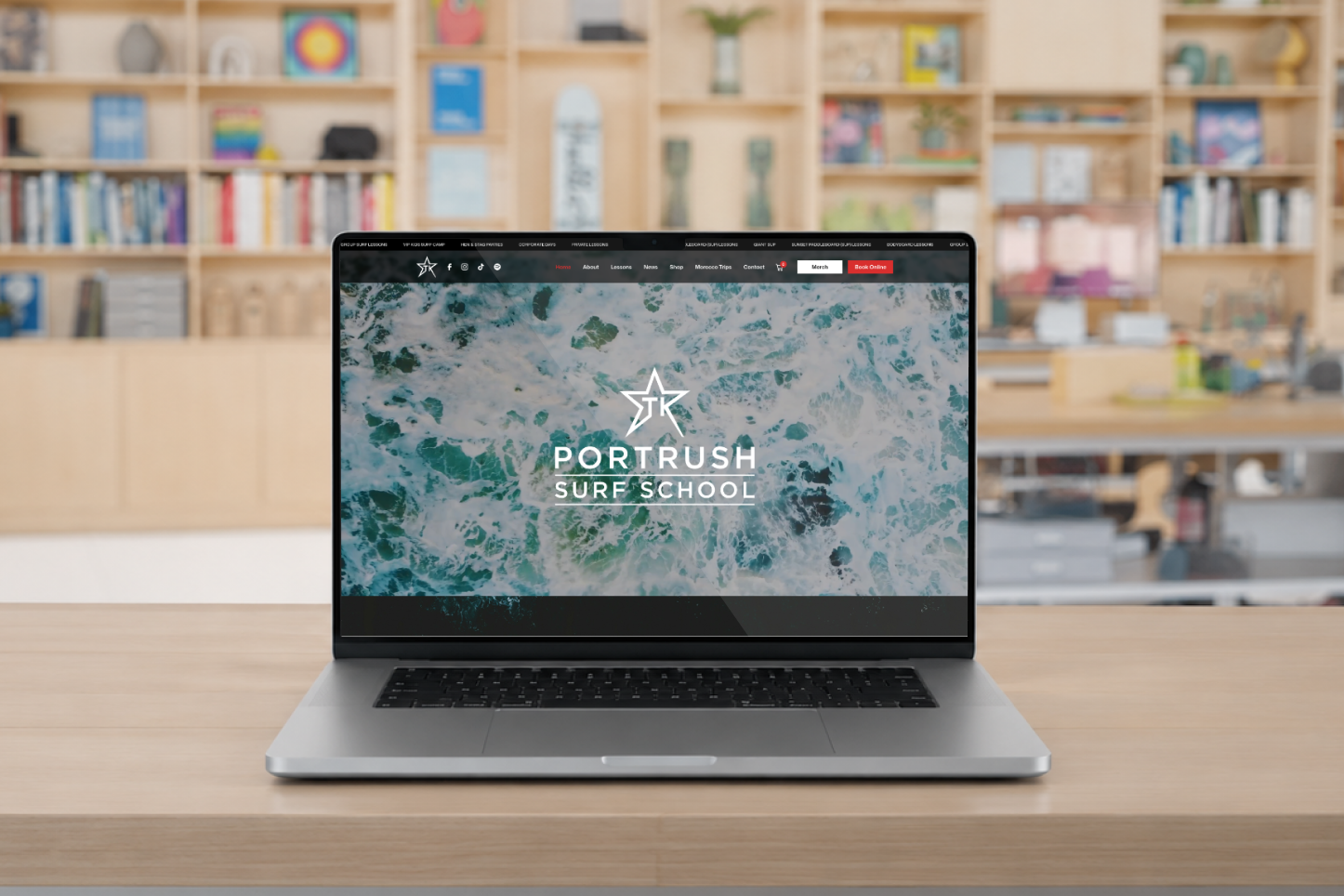
Portrush Surf School: Custom WordPress Website with Ecommerce
A WordPress build for a Portrush surf school, with lessons and gear sold direct through one checkout instead of a phone call.
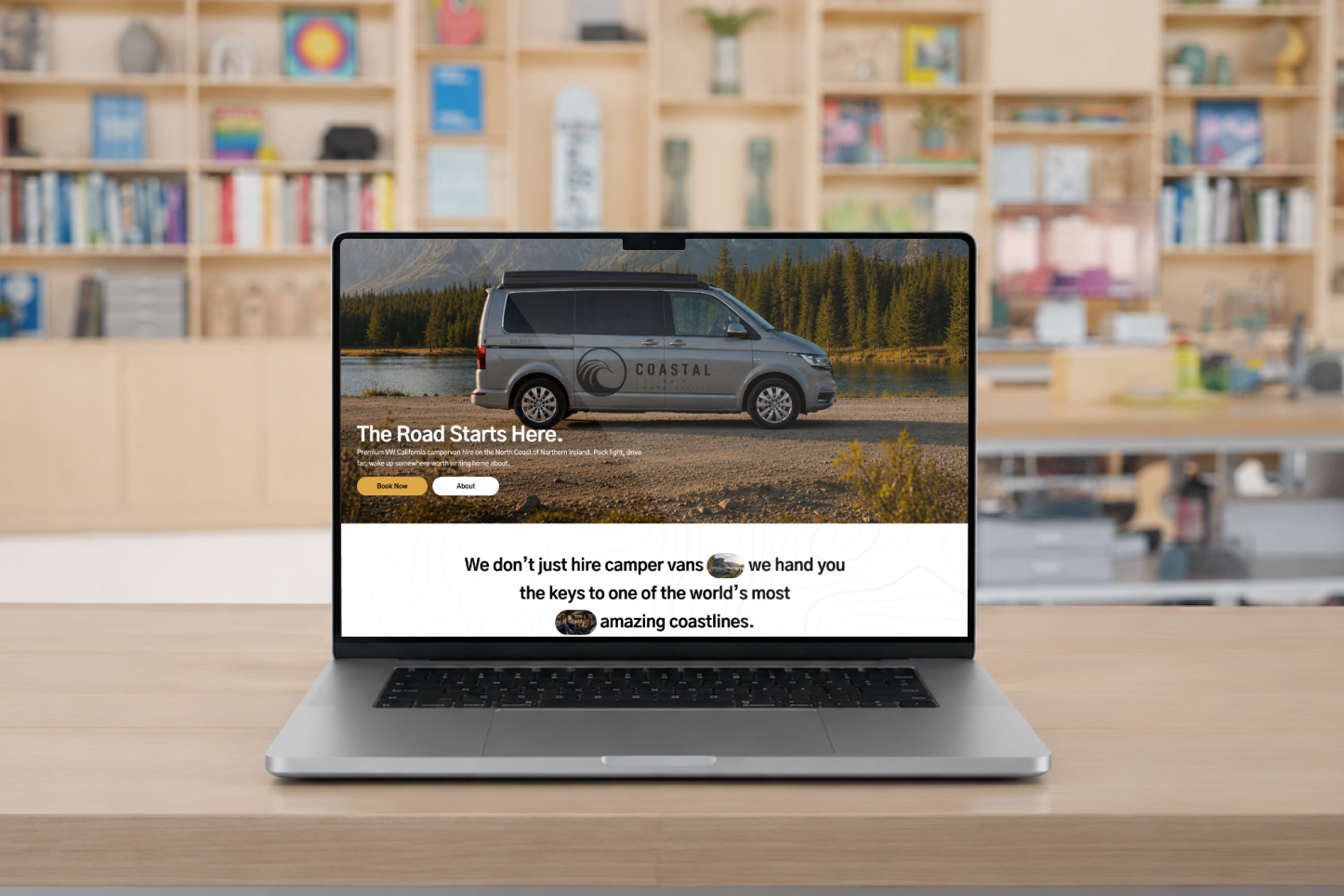
Coastal Camper Collection: A Campervan Hire Website Built to Rank and Book
Campervan hire for the North Coast, built to rank for hire searches and take the booking without a platform in the middle.
Free AEO scanner
Have a website that doesn’t perform?
Use our free AEO scanner to see exactly why, in under a minute. Or skip straight to a real conversation and get in touch directly.
enquiries@lowedesign.io01
On this coast, the booking is the business
A tourism website is not a brochure. It is a till. Every hour it fails to take a booking is revenue that either went to a competitor or went to a platform that charged you for the privilege.
That reframes what matters. The prettiest site on the strand is worth less than one that loads in under two seconds on a phone with two bars of signal, shows live availability, and completes a payment in three taps. Holiday makers decide fast and they decide on mobile, often standing outside in the wind.
So we design backwards from the transaction. What is the fewest steps between someone landing on the page and having paid. Everything else on the site earns its place by supporting that, or it comes off.
The second thing that has changed is how people find you at all. Visitors planning a trip to the North Coast increasingly ask an AI tool rather than scrolling a listings site. That answer is assembled from whatever the model can read and trust, which is a solvable problem and one most operators here have not touched yet.
02Common question
How do you get more direct bookings instead of paying commission?
You get more direct bookings by making your own site the easiest place to book, then giving people a reason to check it before they book elsewhere. Commission platforms win on convenience, not on loyalty.
Four things move the needle. Put live availability and instant confirmation on your own site, because a form that promises a reply within 24 hours loses to a button that confirms now. Make a direct booking visibly better with something the platform cannot match, whether that is a lower rate, a late checkout, a free lesson or a parking space. Rank for your own name, since a meaningful share of people search your business by name after seeing you on a listings site, and if a platform outranks you there you are paying commission on a customer who was already looking for you. And capture the email, because the second stay is the profitable one.
None of that requires leaving the platforms. Most operators here run both, and use the listings site to get found while the direct channel takes the repeat business. The goal is shifting the mix, not burning the bridge.
03Common question
Does a small tourism business need a booking system on its website?
If you take bookings, yes, and the size of the business makes surprisingly little difference. A two room guesthouse loses the same proportion of enquiries to a contact form as a twenty room hotel does.
The argument against is usually cost and fear of double bookings. Both are solved problems. A channel manager syncs your own site with Airbnb, Booking.com and the rest so availability updates everywhere at once, and the monthly fee is generally less than the commission on a single booking.
The exception is genuinely bespoke work where price depends on the conversation, like a private charter or a tailored group itinerary. There an enquiry form is right, but it should still confirm receipt instantly and set expectations on when you will reply.
What we build depends on the operation. Self catering usually wants a full availability calendar. An activity operator wants time slots, capacity limits and weather cancellation handling. A restaurant often just needs a reliable table booking integration and accurate opening hours. We scope that in the first call rather than defaulting everyone to the same plugin.
04
What a demand spike exposes
Portrush gets more attention than a town its size would normally carry. Royal Portrush hosted The Open in 2019 and again in 2025, and around events on that scale the search volume for accommodation, food and activities here rises far beyond a normal summer week.
A spike is a stress test. It finds every weak point at once. Sites that had been coping quietly for years fell over on load, or held up fine and simply had no way to take a booking outside office hours, or ranked nowhere for the phrases people were actually typing.
The operators who did well had done unglamorous work in advance. Hosting that scales, a booking engine that does not need a human, and pages that answered specific questions like where to park, how far from the course, whether there is late food.
The same logic applies to smaller peaks, and those come round far more often: a bank holiday, a festival weekend, a stretch of good weather. Capacity you only need six days a year is still worth having on those six days.
05
What we build for North Coast operators
Different parts of the tourism trade need different machinery, and grouping them all under hospitality is how you end up with a site that suits nobody.
Holiday lets and guesthouses
Stays need availability, honest photography and the practical answers people search for before they commit: parking, dogs, check in times, distance to the beach. We build in a direct booking engine synced to whatever channels you already sell through, and structure the property information so it can be pulled into a search result or an AI answer without a click.
Activity operators
Surf schools, boat trips, coasteering and guided walks all share a problem: capacity is finite, the weather is not, and the customer often books the same day. That needs time slot booking, clear capacity limits, a cancellation and rescheduling policy the site can actually enforce, and gear or gift vouchers sold through the same checkout rather than a separate system.
Food and drink
Restaurants, cafes and bars get judged on information accuracy more than anything else. Wrong opening hours cost you a table. We get hours, menus, dietary options and table booking into structured data so they surface correctly in Google, in Maps and in an AI answer when someone standing nearby asks where is open now.
Nearby
The trade changes character quickly along this stretch. A mile and a half round the headland the mix is independent retail and food rather than stays and activities, and inland it is a different economy again.
See web design for Portstewart and Coleraine.
See more of our work or start a project.
Sources
Frequently asked questions
Lowe Design builds websites for tourism businesses across the North Coast of Northern Ireland, working from Coleraine with clients in Portrush, Portstewart and along the Causeway Coast. The work is weighted towards operators who take bookings: surf schools, self catering, guesthouses, activity providers and restaurants. What separates a tourism build from a standard business site is the booking layer, the mobile performance requirement, and the need to handle demand that arrives in spikes rather than evenly. If you are shortlisting, ask any agency to show you a live site they built that takes a real booking, and check how many taps it takes on a phone.
A holiday let website is quoted per property because the cost turns on how many units you are letting and which booking system the site connects to. The booking software is where owners get caught out, since a booking engine and channel manager carry a monthly fee on top of the build, and some agencies leave that out of the headline figure. We set it out separately at scoping so you can see both numbers. The maths usually works quickly: the commission on a handful of direct bookings tends to cover the monthly cost, and everything after that is margin you keep. We will run that calculation on your actual occupancy and rates before you commit to anything.
No, provided the site is connected to a channel manager, which syncs availability across your own website and every platform you list on. When a room or slot sells anywhere, it disappears everywhere within moments. Double bookings happen when someone runs a calendar on their site that is not connected to anything, which is why we do not build it that way. Setup is part of the project and we test it with real bookings before launch rather than assuming it works.
Yes for most operators, at least while you are building direct demand, because those platforms are genuinely good at reaching people who have not heard of you. Treat them as an acquisition channel rather than your booking system. The aim is to shift the mix over time: platforms bring the first stay, your own site and email list bring the second and third. Operators who go direct only, with no established audience, usually see occupancy drop before it recovers. That transition is worth planning rather than doing overnight.
You show up in AI answers by making your business easy for a language model to read, verify and trust. That means a website with plain factual content stating exactly what you offer and where you are, structured data marking up your location, prices, hours and availability, and consistent details across your site, Google Business Profile and any directory listing you appear on. Corroboration matters as much as the site itself, since models weight what third parties say about you. Reviews, tourism listings and press mentions all feed that. Our free [AEO scanner](/tools/aeo-scanner) will show you how your current site reads to an AI tool.
Yes, if we start with enough runway, and the practical deadline is earlier than most operators expect. Bookings for the summer are made months ahead, so a site that launches in June has missed most of the demand it was built for. Anything with a booking engine needs extra time on top of the build for payment setup and testing. Tell us the date you are aiming at and we will schedule backwards from it at scoping, or tell you plainly that it is too tight and what a realistic target looks like instead.
Got a business problem worth solving?
Get in touch