Web design / Portstewart, County Londonderry
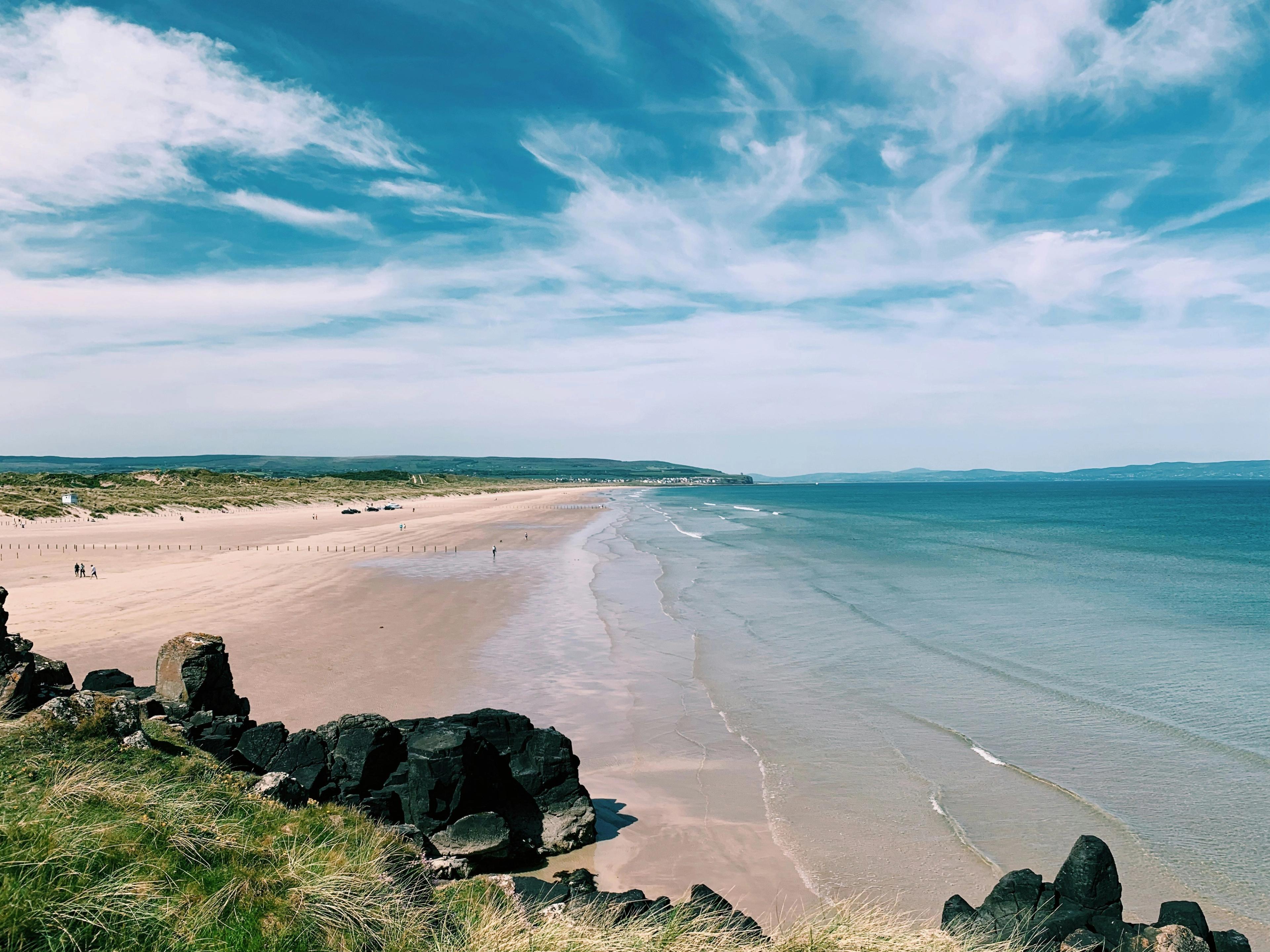
Lowe Design builds websites for independent businesses in Portstewart, County Londonderry. We work with cafes, restaurants, shops, guesthouses and small tourism operators on and around the Promenade. Every site is structured so that Google, ChatGPT, Claude and Perplexity can read it, trust it and recommend it when someone nearby asks where to eat, shop or stay.
Recent work on this coast
Work from businesses nearby, chosen because the problems overlap: short seasons, small teams, and a customer deciding in the moment.

How a Distinctive Brand Helped Chosen Coffee Stand Out on the North Coast
A coffee brand built to hold its own on a promenade where every other window is competing for the same coffee break.
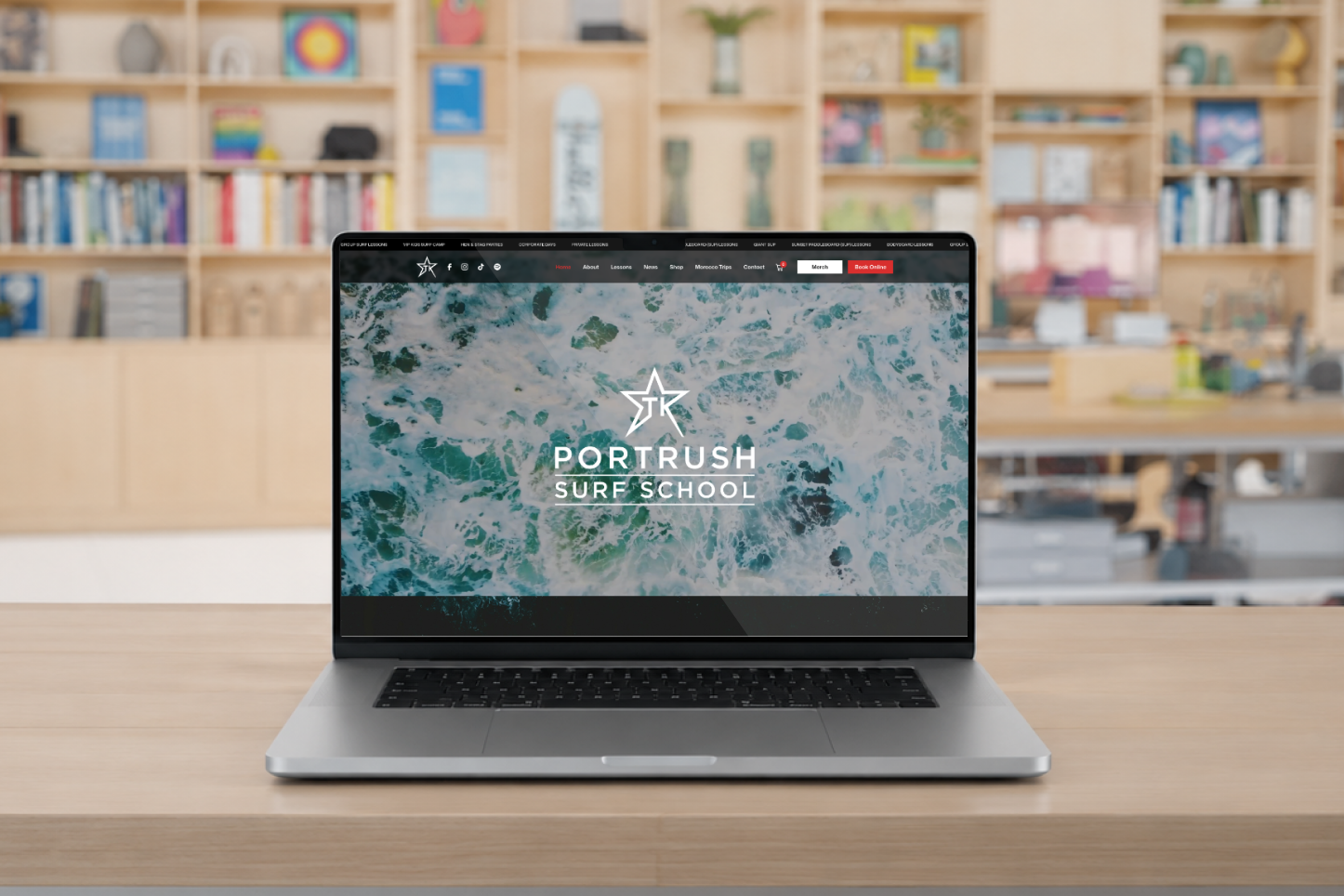
Portrush Surf School: Custom WordPress Website with Ecommerce
A short stretch up the coast: the same booking-first thinking behind a Portrush surf school's site, built so a single tap replaces a phone call.
Free AEO scanner
Have a website that doesn’t perform?
Use our free AEO scanner to see exactly why, in under a minute. Or skip straight to a real conversation and get in touch directly.
enquiries@lowedesign.io01
The decision gets made on a phone, a hundred metres away
Picture a family off the strand at four on a Saturday, sandy, hungry, undecided. One of them pulls out a phone. Somewhere between that moment and the next twenty minutes, they choose. That decision is worth more to a small business here than any amount of brand awareness.
What happens in those twenty seconds is not really browsing. It is a query, and increasingly it is a question rather than a keyword. Somewhere good for coffee near Portstewart that is still open. Dog friendly lunch near the strand. The answer comes back as a short list, sometimes from Google, sometimes from an AI assistant, occasionally read out loud in a car.
To be on that list your business has to be legible to a machine. Hours that are accurate and machine readable, a menu that exists as text rather than trapped in a PDF or a JPEG, a location that is unambiguous, and a page that loads before the patience runs out.
Most independent businesses here fail at least one of those, usually the menu. It is a small fix with a disproportionate return, and it is the sort of thing we sort out as a matter of course.
02Common question
How do you get a business to show up in AI search?
You get into AI answers by being readable, verifiable and corroborated. Those are three separate jobs and skipping any one of them keeps you out.
Readable means your website states the facts in plain text where a model can find them. What you sell, where you are, when you open, what it costs. Not in an image, not behind a script that only runs after a click, not implied by a photograph. If it is not in the HTML, assume it does not exist.
Verifiable means structured data, the schema markup that labels your content so a machine knows this string is an opening time and that one is a price. It removes the guesswork, and a model that has to guess will usually pick the competitor it does not have to guess about.
Corroborated is the one people miss. Language models weight what other sources say about you far more heavily than what you say about yourself. Your Google Business Profile, reviews, tourism listings, local press and directory entries all feed the picture, and they need to agree with each other exactly. One wrong phone number across two listings is enough to introduce doubt.
We handle the first two as part of every build and advise on the third. You can test where you currently stand with our free AEO scanner.
03Common question
What does an independent shop actually need on its website?
Less than most agencies will try to sell you, but the essentials have to be right rather than merely present.
Five things do the heavy lifting. Accurate opening hours, including the seasonal and bank holiday variations that catch every coastal business out. A clear description of what you sell in the words customers would use rather than trade language. Real photographs of the actual place, because stock imagery reads as untrustworthy and increasingly gets recognised as stock. A location that is unmistakable, with parking noted, since visitors do not know the town. And one obvious way to make contact.
What you can usually skip: a blog nobody updates, a full ecommerce system when you sell in person, a bespoke booking engine when a phone call works fine, and an about page that reads like it was written by a committee.
We scope small builds honestly. If four pages will do the job we build four pages and charge for four pages. A site that is smaller and correct outperforms a bigger one that is half finished, and it is far more likely to stay accurate a year later.
04
Structured data is the boring thing that wins
Structured data is code that sits in the page and labels your information for machines. It never shows on screen. It is the least interesting part of a website and it is quietly one of the most valuable.
Without it, a search engine reads open 9 to 5 as a sentence and has to infer what it means. With it, that same information is tagged unambiguously as an opening hours specification, and can be shown directly in a search result, a map listing or a voice answer with no click needed.
For a small hospitality or retail business the useful types are limited and worth doing properly: the business itself, its location, opening hours, menu, price range, reviews, and any events you run. That is most of what anyone asks about you.
It is also the layer that AI answer engines lean on hardest, because it is unambiguous where prose is not. Two cafes with identical quality, one with structured data and one without, will not get equal treatment in an AI answer, and the gap is widening rather than closing.
It takes hours to implement and it is included in every build we do. We do not sell it as an upgrade.
05
What we build for businesses in Portstewart
The mix here is independent and owner run, which changes the brief. These sites need to be maintainable by the person who also opens up in the morning.
Cafes and restaurants
Menus as text rather than a downloadable PDF, hours that are correct including the seasonal changes, dietary information marked up properly, and table booking where it earns its place. We set up the CMS so that the person who changes the specials board can change them on the site in a minute from a phone, because a menu that goes stale is worse than no menu at all.
Independent retail
Shops selling in person need discovery rather than ecommerce, and the two get confused constantly. The job is showing what you stock, why it is worth the walk, and exactly where to find you. Where online selling genuinely adds something, usually for a specific range rather than the whole shop, we build it narrow and keep the stock control manageable for one person.
Guesthouses and small stays
Small stays compete against much larger operations for the same search results, and win on specificity rather than budget. Rooms described honestly, the practical answers people want before booking, and a direct enquiry or booking route that does not send them back to a commission platform. Structured data on rates and availability does a lot of quiet work here.
Nearby
The Causeway Coast changes character every few miles, and so does what a website here has to do. The tourism operators round the headland face a different problem, and inland the customer is local rather than passing.
See web design for Portrush and Coleraine.
See more of our work or start a project.
Sources
Frequently asked questions
Most small business websites are invisible to AI tools for one of three reasons: the key information is locked in images or PDFs rather than text, there is no structured data telling a machine what the content means, or the details differ between the website, Google Business Profile and directory listings. Any one of those is enough to keep you out of an answer. The fix is usually a matter of days rather than months, and it is largely technical rather than a rewrite. Our free [AEO scanner](/tools/aeo-scanner) checks your site against these and tells you which of the three is your problem.
Yes, and the reason has changed. It is no longer about people browsing your site, since many customers will never load a page you own. It is that search engines and AI tools need a source they trust, and a website you control is the only one where you set the facts. Without it, what appears about your business is assembled from third party listings, which go out of date, and reviews, which you do not write. A small accurate site is the reference point everything else gets checked against. For a shop or cafe that can be four pages.
Yes, we build menus so the owner can update them without help, and we set that up as part of handover. The important part is that the menu lives as text on the page rather than as a PDF or a photo of a chalkboard, because a machine cannot read prices out of an image reliably and neither can a customer on a small screen. Text menus can be marked up with structured data so dishes, prices and dietary information appear correctly in search results and AI answers. It also means changing a price takes seconds instead of a trip back to a designer.
A four to six page website for an independent shop or cafe is one of the faster builds we do, and the timeline gets agreed at scoping before anything starts. The build is rarely what holds it up. Copy approval and photography set the pace, so we fix those dates at the start rather than leaving them open ended. If you already have decent photographs and a clear idea of what you sell, it moves faster. If photography needs arranging, allow time for it and budget for it properly, because bad images undo good design on a site this size.
SEO is optimising to rank in a list of search results, AEO is optimising to be quoted in an answer. They overlap but they are not the same discipline. SEO rewards being one of ten options and getting clicked. AEO rewards being the source a language model trusts enough to cite, which puts more weight on factual clarity, structured data, self contained sentences that make sense out of context, and corroboration from third parties. A page can rank well and never get quoted, and increasingly the second one is where the customer actually is. We build for both, because the traditional search traffic has not gone away.
Yes, and improving an existing site is often the cheaper answer. We start by looking at what is there, because the underlying platform is sometimes fine and the problems are structural: missing schema markup, information trapped in images, slow loading, or content that never answers what people actually search for. Those are fixable without a rebuild. Where a rebuild genuinely is the right call, usually because the platform caps performance or the structure cannot be fixed sensibly, we will show you why rather than just asserting it. We would rather do the smaller job well.
Got a business problem worth solving?
Get in touch